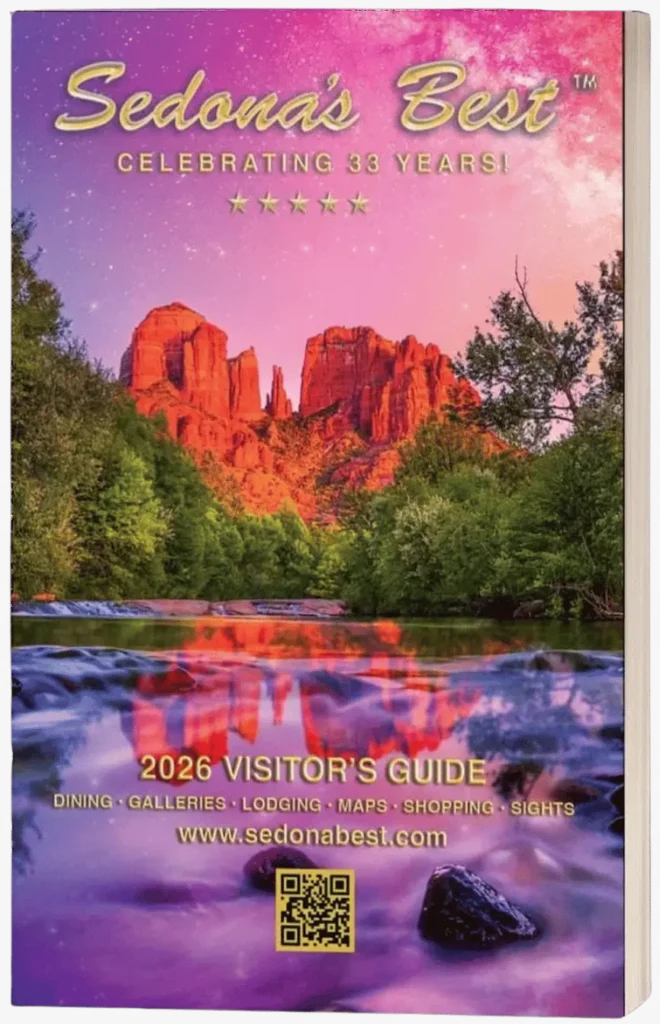
The Best of Sedona
Get the best of Sedona – planned by the locals who’ve been guiding visitors for over 30 years.
Explore the Best of Sedona
CURATED LOCAL FAVORITES – TRUSTED FOR OVER 30 YEARS
Welcome to Sedona's Best Visitors Guide
For over three decades, Sedona’s Best has helped visitors and locals alike discover what truly makes Sedona unforgettable. From iconic red rock adventures and unforgettable dining to art-filled afternoons, restorative wellness experiences, and scenic stays, our guide highlights the experiences that define Sedona and the Verde Valley.
Curated by locals and trusted by Sedona and Scottsdale concierges, Sedona’s Best connects you with the places people actually recommend — not paid lists, not algorithms without context — just the best of the best, all in one place.
From hiking iconic trails like Cathedral Rock and Devil’s Bridge to exploring arts & culture at the Tlaquepaque Arts & Shopping Village, Sedona balances natural wonder with vibrant community life.
Explore, experience, and fall in love with Sedona. Guided by the best insights, recommendations, and local expertise.
Joey Best, Founder
Sedona's Best Visitors Guide
Discover The
Beauty of Sedona
Never before has Sedona been captured on film in such a mesmerizing way. The Beauty of Sedona video is simply breathtaking. You’ll be spellbound by Sedona’s unforgettable beauty.
VIEW OUR TOP RATED SEDONA TOURS
Getting ready to visit Sedona?
View our free magazine that’s been educating visitors of Sedona for more than 30 years.